Join: slido.com · #0399
The opening survey is live NOW — it's about your week with the instrument you built. (New tonight? There's a branch for you.) It also asks for your GitHub username — so I can find your instruments.
Also: Open the laptop, open your your-first-instrument repo from last week. Tonight it gets a permanent home.
Your Instrument,
Deployed
Permanence, extension — and making the instrument unmistakably yours.
What you need to know
- You already have an A. Nothing here is graded; your own reward function is the assignment.
- Catch up any time: Three recordings, slides behind Canvas, a ~20-minute podcast per session.
- Everything is recorded; your speech is never individually attributed in any course material.
- Tonight builds on last week's build — pair up with a returning neighbor; shared screens build shared knowledge.
The shape of tonight
- Looking back — what a week did to your instruments, and to you (~20 min)
- The wild audit — two of you caught real bugs; what that means (~8 min)
- Deploy — R7 together: Every server gets a permanent home (~35 min) · then the break
- Make it yours — extend your server with a tool only you would build (~50 min)
- Spotlights & share-back — a few of you volunteered; then the room
- One gem each, survey, close — you'll write a short metacognitive gem before we go · hard stop 8:14, as always
Looking back
What did a week do?
Last Thursday, thirty-some servers told the time for the first time. Then a week happened: Laptops closed, tunnels died, some of you extended, some of you forgot — all of that is data.
The opening survey you've been filling is a metacognitive audit of your own week: Not "did you do the homework" (there is none) — what happened between you and the thing you made?
Reading ourselves back
Results on screen now. One question deep, with follow-ups — not a tour of every chart.
From last week's exit survey, on friction: "Every day there's something. A late bus, spilled coffee, my dog being cute and not letting me leave my apartment… This week, my friction is not wanting to do anything. But a classmate inspired me to show up."We all need that classmate. Tonight, the pairing list makes it structural.
The audit test, passing in the wild
One of you, leveling with Claude about the time server, noticed something: "The chat says four hours have passed — I've actually been here several minutes."
The bug was real and it was mine: The server read naive timestamps as UTC while the clock answered in Eastern. Caught by a student reading the code with their collaborator — fixed and credited on the public repo that same night.This is the whole course in one moment: Direct the AI, then audit it. The test I wrote to check your skills checked mine.
Every mistake is a rule waiting to be written
- A fresh Windows machine surfaced a breaking library change my cached environment had been hiding — a clean environment is an auditor nobody hired. → Rule: pin the version. (It's in your template now.)
- The timezone catch → Rule: read naive timestamps as local. (Also in your template — with credit.)
- And this week my own crew caught each other the same way — a date labeled with the wrong weekday, flagged in two minutes because the weekday makes a bare date checkable.
Mistakes here are not punished — they're metabolized. The rules they become are the course's actual product.
Deploy
A tunnel dies with your laptop.
An instrument should outlive the room.
Last week, exactly zero of us finished R7. Tonight, in the next half hour, every server in this room gets a permanent address on the internet — free, and mostly automatic.
Honest fine print up front: The free tier naps when idle — the first call after a nap takes ~30 seconds. That's the price of free, and it's fine.
The handshake protocol
Networks don't form by osmosis — they form where a protocol lowers the cost of the first contact. Speed dating engineered it for romance; arranged introductions did it for centuries before; the tech world runs on the same trick — for a long time Silicon Valley's main advantage was density: people who could meet often, cheaply, with a reason to talk.
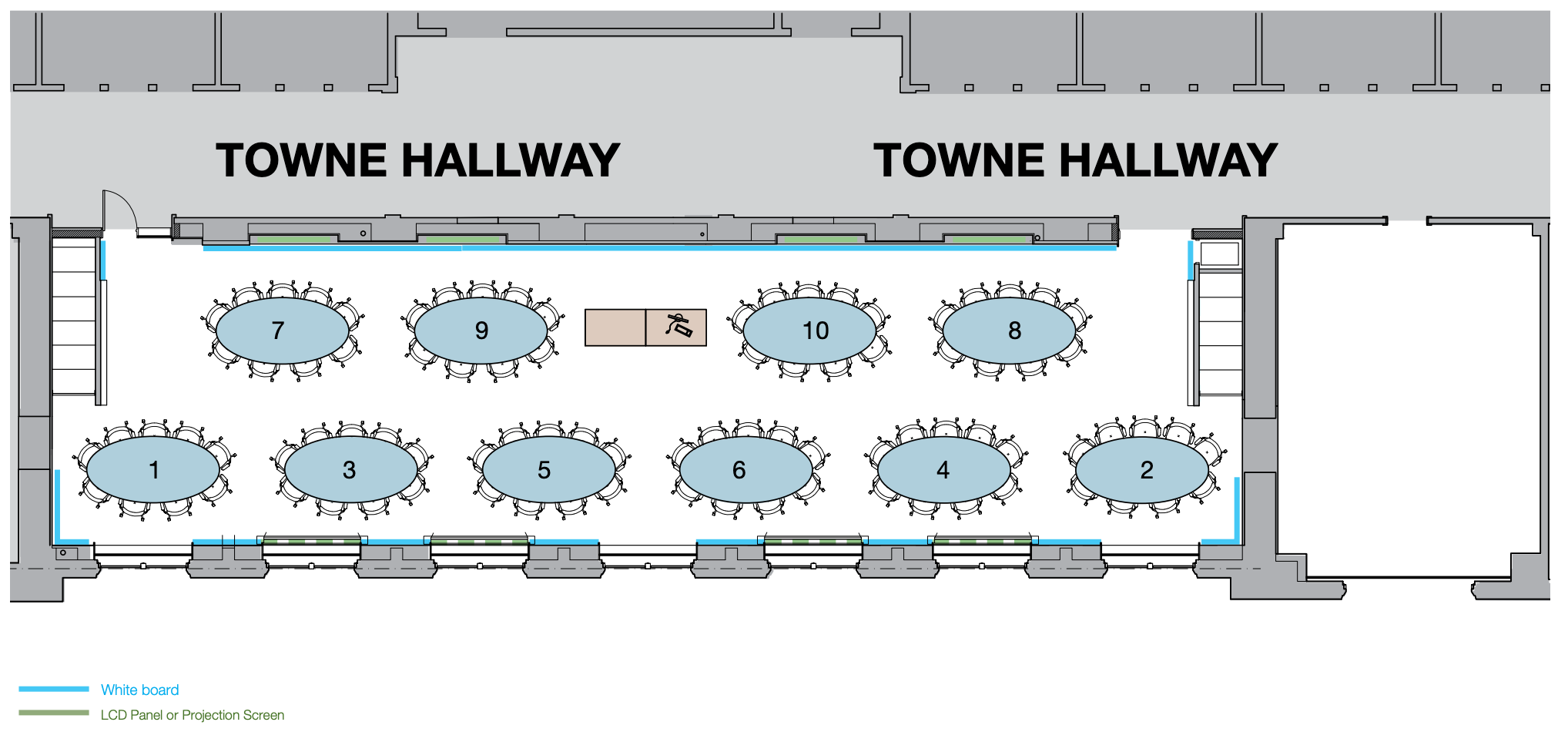
Tonight, ours: The opening survey told us who's where on the ladder. In a few minutes, you and a partner get an email — who you each are, which table to meet at, whose repo you're looking at. The helper walks to the climber's table. The reason to talk is pre-supplied; the rest is yours.
The tables have numbers
Render — the permanent home
- render.com → Sign in with GitHub (the account holding your repo).
- Top right: New + → Blueprint.
- Connect / select your
your-first-instrumentrepo → Apply. (The repo'srender.yamldoes everything else.) - ~2 minutes of build logs → your service shows
https://…onrender.com. Copy it. - claude.ai → Settings → Connectors → edit
first-instrument→ swap the URL to the Render one +/mcp. (Claude Desktop instead? Same swap inclaude_desktop_config.json— ask your terminal collaborator to do it.)
⚠ Instantiated last week? Expect a pull request from me tonight. Your copy carries a one-line bug I hit myself this afternoon, dress-rehearsing this exact climb — and instead of telling you the fix, I'm sending it the way collaborators do: a PR to your repo. When it arrives: push your local changes first, then accept the PR on GitHub, then git pull. That accept-and-pull loop is its own rung — real projects run on it. (Fresh instantiation tonight = you already have the fix; no PR needed.)
Claude Code drives, as always: "Deploy this repo to Render via its blueprint and tell me my URL" gets you most of the way. New tonight? Do R1–R4 first — the ladder card is in the repo's COURSE-STEPS.md; helpers are circulating.
your turnClose your laptop lid
- Connector swapped to the Render URL? Ask Claude the time — from your phone if you like.
- Now close the lid. Ask again. It still answers.
- That's the difference between a demo and an instrument: It no longer needs you present.
Break — back at 6:35
When we return: Your server stops being my template and becomes yours.
Make it yours
Add a tool that reaches something you care about
- Last week, minutes after the ladder, one of your servers was already answering with a Twilight quote tool. Nobody assigned that. That's the spirit, exactly.
- Ideas the room already had:
days_until()your real deadlines · your gym's hours · quotes you collect · a tiny CSV you care about, made conversable withsearch()+get(). - Small is the assignment: one tool, ~20 lines, working beats three tools imagined. Claude Code drives; you direct.
Each change: Edit → push → Render redeploys itself (~2 min) → ask Claude to try it. Your edit-run-ask-observe loop now spans the internet.
Level with your partner about the new tool
Last week this exact conversation caught a real bug in my code. Audit your own instrument the same way — and let the "useful, not impressive" question steer what you build next.
your turnBuild
- Finish R7 if the deploy fought you — then extend. (Deployed-and-plain beats local-and-fancy.)
- One tool, working, that's yours. Then a second if the first came easy.
- Done early? ① Help a neighbor — the pairing list marks who asked for one. ② Ask Claude what your server could become and try the smallest piece. ③ Rest — resting is allowed.
Show
your turnSpotlights: 2–4 minutes each
- What you built or extended — shown through Claude answering, if it's up.
- What you found helpful, what fought you, what you'd tell last-Thursday-you.
- No slides, no polish — the working thing and your honest read of it.
Didn't volunteer but the mood strikes now? The floor is open after the volunteers.
your turnShow one thing
- Your instrument's permanent URL answering — or the rung you reached and what fought you.
- What did Claude say when you asked "useful, not impressive"? Some of those answers are next week's material.
- Name a save someone gave you tonight — the room debugged as a community again.
your turnWrite one metacognitive gem
You watched me do this with my collaborator's 120-line mistake: The error wasn't punished — it was metabolized into a rule that never lets it happen again. Now yours, from your own week of building:
Three lines is a complete gem. The best ones are small and true — "I trusted the green checkmark" beats a paragraph. These seed next week's Toolshed cards.
Next week: The Toolshed
- Your instruments now survive without you. Next: a shared shelf — every instrument gets a card, the room gets a catalog, and we think about what a collection of instruments does that one can't.
- This week, at your own pace: Keep the server up · extend it once more · notice one moment you reached for it in real life — that noticing is the assignment.
- New tonight and mid-ladder? COURSE-STEPS.md has every rung; the steps don't expire, and helpers answer on the class thread.
your turnExit survey
- How was today? (1–5 — the running series)
- Is your instrument deployed? (R7: done / close / not yet — no judgment, real data)
- The tool you added: What is it, in one line? · GitHub username, if the opening survey missed you
- Your metacognitive gem — the three lines from the last exercise go here
Your instrument no longer needs you present.
That's not a small thing — it's the difference between a thing you did and a thing you have. Ask it something tomorrow, from your phone, and notice the friction that isn't there.
Same room. Next Thursday. 5:15. · Episode 2 of the podcast is out today — your corrections shaped its cuts; the editing practiced what we preach.
Plan B — if the cloud won't have us
Render down, wifi dead, room unprepared: we don't fight infrastructure for an hour. We pivot here and deploy at home instead.
Your biases have names
- Confirmation bias, anchoring, sunk cost, the planning fallacy — catalogued, named, studied: the mind fails in patterns, not at random. Naming a pattern is the first instrument (words are functions for concepts — you've heard this before).
- And the oldest working metacognitive harness isn't software: cognitive behavioral therapy. The thought record — situation, automatic thought, distortion, balanced response — is a paper instrument for auditing your own outputs. Sound familiar? It's the gem template with a century of clinical mileage.
- MoodNotes and its kin are CBT instrumented — an app as harness for noticing distortions at the moment they run. We'll build with this idea later in the term.
your turnPick a bias. Interrogate it.
Pop psychology loves the bias catalog — some of it replicated, some of it didn't survive the replication crisis. Pick ONE bias you believe you have. With Claude: What's the actual evidence? What replicated, what didn't, what's contested? Ten minutes; bring back one claim you now trust MORE and one you trust LESS.
This — auditing the audit — is its own future session. Tonight it's a taste: the point of this course is never to hand you a new catechism, even about your own mind.